

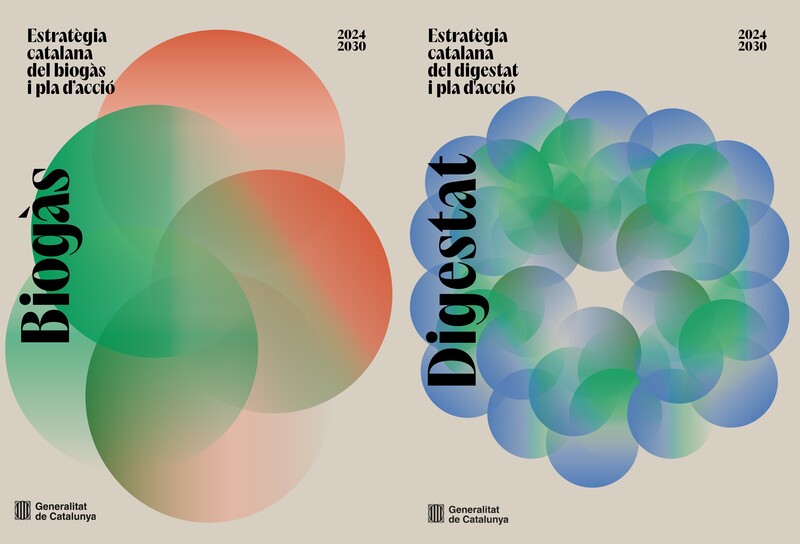
Catalonia sets a clear path to triple biogas production and recover 7,8 million tons of digestate per year.
Catalonia is taking a pioneering role in the development of renewable gases in Spain, with its biogas and digestate strategies for 2030, published in March 2025. These initiatives will facilitate the transformation of organic waste and by-products into resources and foster a truly circular bioeconomy.
A decentralized model to maximize the territory's biogas potential
The Catalan Biogas Strategy 2024-2030 proposes the construction of biogas plants distributed throughout the geography, adapted to the local availability of organic materials such as slurry, agro-industrial waste, organic fraction of municipal solid waste (OFMSW) or sludge from wastewater treatment plants.
The goal is to triple current primary energy production from biogas to 2 TWh per year by 2030, which will prevent the emission of more than 350.000 tons of CO₂ equivalent each year.
Furthermore, it is projected that 8,5 million tons of organic waste will be processed annually , primarily from the agricultural sector, which accounts for 32% of the usable potential. The Catalan model focuses on efficient co-digestion using cutting-edge technologies, on plants located within the local area, and on promoting local energy communities to encourage distributed consumption.
Digestate as a strategic resource
In parallel, the Catalan Digestat Strategy establishes the foundations for converting this biogas byproduct into a high-quality organic fertilizer. Anaerobic digestion improves the availability of nutrients in the digestate and reduces the risk of soil and water contamination, but its success depends on proper subsequent management.
Therefore, the plan includes technologies for separation, composting, nutrient concentration, and water recovery, promoting the production of biofertilizers and other bioproducts with market value.
It is estimated that by 2030, nearly 7,8 million tons of digestate or digestate will be produced in Catalonia. Proper recovery would replace up to 30% of nitrogen fertilization needs and cover nearly half of the phosphorus demanded by the region's crops. Furthermore, up to 3,9 cubic hectometers of water could be recovered annually, an invaluable resource in the current situation of water stress.
Both strategies are integrated into Catalonia's major energy and bioeconomy plans (PROENCAT, EBC2030) and are aligned with the European objectives of RED III and REPowerEU. They are supported by the Catalan Energy Institute, the Directorate General for Agriculture, the Waste Agency, and the Catalan Water Agency, and are aligned with European regulations on fertilizers and waste.
The Catalan model and its comprehensive and realistic vision, which focuses on decentralized plants, sets environmental, energy, and economic objectives, and focuses on the recovery of digestate, could be key to consolidating biogas projects in areas with high livestock populations, such as the regions of Lleida and Girona, which require effective solutions for nutrient surpluses.
Catalonia demonstrates that it is possible to move toward a cleaner energy model without neglecting agricultural sustainability or territorial balance. And it does so with two fundamental tools: biogas as a viable renewable energy source and digestate as the fertilizer of the future.
___________
The 17th International Bioenergy Congress (2024) organized a round table on the role of administrations in promoting renewable gases, in which energy planning officials from several autonomous communities participated.
Laia Sarquella , from the Catalan Energy Institute , explained, among other things, that they have developed a "standard report" to facilitate authorizations, pointed out the importance of involving citizens from the design phase, even considering formulas such as energy communities or rural heat networks, and announced the development of the already approved strategies.