

BioLNG is biomethane, a renewable gas produced from the recovery of waste, which in this case is liquefied to transport it to the final consumer. This process is essential to promote the decarbonization of transportation.
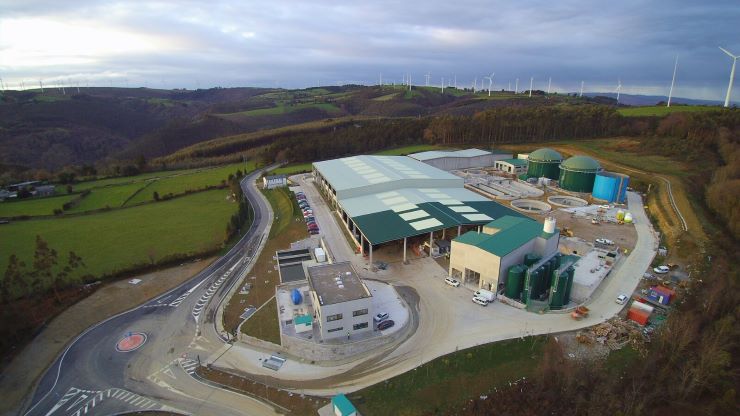
As part of this commitment, Naturgy has already signed its first long-term purchase agreement for renewable gas in liquid form. The agreement will involve the purchase of 25 GWh of BioLNG produced annually at Sologas' waste-to-energy plant in As Somozas (A Coruña), which is scheduled to begin operations at the end of 2023.
ADDSynergy, part of the Pietro Fiorentini Group , will be responsible for implementing a process that will allow for the integrated production of BioLNG and liquid CO2, achieving CO2 capture and increasing the quality of the BioLNG. This capture will give the product a negative carbon intensity, representing a significant milestone in meeting Spain's decarbonization targets.
“Renewable gas must play a leading role in the decarbonization of transport, a sector that accounts for almost a third of greenhouse gas emissions in the European Union. This project, a pioneering one in Spain, represents a further step in the search for innovative solutions to promote biomethane as a strategic lever in the energy transition,” explains Silvia Sanjoaquín , Director of New Business at Naturgy.
Among all its potential uses, BioLNG has great potential to drive the decarbonization of heavy road and maritime transport at a reasonable cost. This renewable gas is traditionally distributed by trucks to LNG terminals to be used as fuel for ships (bunkering), heavy road transportation or other uses. Its production is growing rapidly in Europe as it is recognized as a necessary fuel with high potential for the energy transition that can be mixed with LNG of fossil origin.
Decided commitment to biomethane
The company has established itself as one of the main promoters of renewable gas in Spain, with more than 60 projects in different phases of development. It has two of its own biomethane production plants: one located in the Bens WWTP (A Coruña) and another located in Cerdanyola del Vallès (Barcelona), which was the first in Spain to inject renewable gas from landfills into the network. In the coming months, a third is expected to come into operation in Vila-Sana (Lleida) and the processing of two others to be built in Torrefarrera (Lleida) and Utiel (Valencia) has already begun.
More info: